
Voice AI's Ultimate Turing Test Win: Legal Implications
The legal world is abuzz with the news that Smallest.ai, a burgeoning startup, has successfully raised $13 million in funding for its groundbreaking voice AI, which reportedly passed the venerable Turing Test. This isn't merely another funding round; it's a seismic event that signals a profound shift in human-machine interaction, with monumental implications for the legal industry. For decades, the Turing Test – a benchmark for a machine's ability to exhibit intelligent behavior equivalent to, or indistinguishable from, that of a human – has been the holy grail of artificial intelligence. While various chatbots have claimed partial success, a *voice* AI achieving this feat opens an entirely new frontier, especially for sectors reliant on nuanced communication like law.
Sudarshan Kamath, CEO of Smallest.ai, has spearheaded a team that has pushed the boundaries of natural language processing and synthetic voice generation, creating models designed to make AI phone calls truly human-like. This technological leap means that an AI can now engage in conversations so authentic that a human interlocutor cannot reliably tell if they are speaking to a machine or a person. For law firms, this isn't just a fascinating technical achievement; it represents a tangible opportunity to revolutionize client intake, streamline operations, and enhance overall efficiency in ways previously unimaginable. The era of clunky, robotic phone systems is definitively over, ushering in a future where AI voice assistants can handle complex legal queries and client interactions with unprecedented sophistication. As we delve into the specifics, consider the competitive advantage such capabilities offer. Discover how your firm can leverage these advancements.
The Turing Test Triumphant: What Smallest.ai's Breakthrough Means for Law
Alan Turing's seminal 1950 paper, "Computing Machinery and Intelligence," proposed an 'imitation game' to determine if machines could think. For over 70 years, passing this test, particularly in real-time, unstructured voice conversations, remained an elusive goal. Smallest.ai's recent $13 million Series A funding, with significant backing from leading venture capitalists, underscores the market's confidence in their ability to deliver ultra-fast, human-like voice AI. This isn't just about mimicking speech; it's about understanding context, intonation, and responding with appropriate empathy and nuance – skills critical in legal dialogues.
The ability of voice models to pass the Turing Test signifies a maturation of AI that directly addresses the communication demands of law firms. Imagine a prospective client calling your firm, distressed or confused, and being met not by an automated menu or a harried receptionist, but by an AI assistant capable of understanding their emotional state, asking clarifying questions, and providing genuinely helpful information, all while sounding indistinguishable from a human. Learn more about AI Receptionist Disclosure: Essential Legal Compliance for Firms. This level of interaction builds trust from the very first touchpoint, a critical factor in client retention and reputation.
This breakthrough challenges traditional notions of what AI can accomplish in professional services. The startup is building voice models designed to handle complex scenarios, moving beyond simple Q&A. This advanced capability means the AI can engage in lead qualification, identify urgent matters, and even provide basic information about legal processes, all while maintaining a professional and reassuring tone. Law firms that embrace this technology stand to gain a significant edge in responsiveness and client experience, setting a new standard for accessibility and service quality in the legal sector.
Redefining Client Intake and Communication with Advanced Voice AI
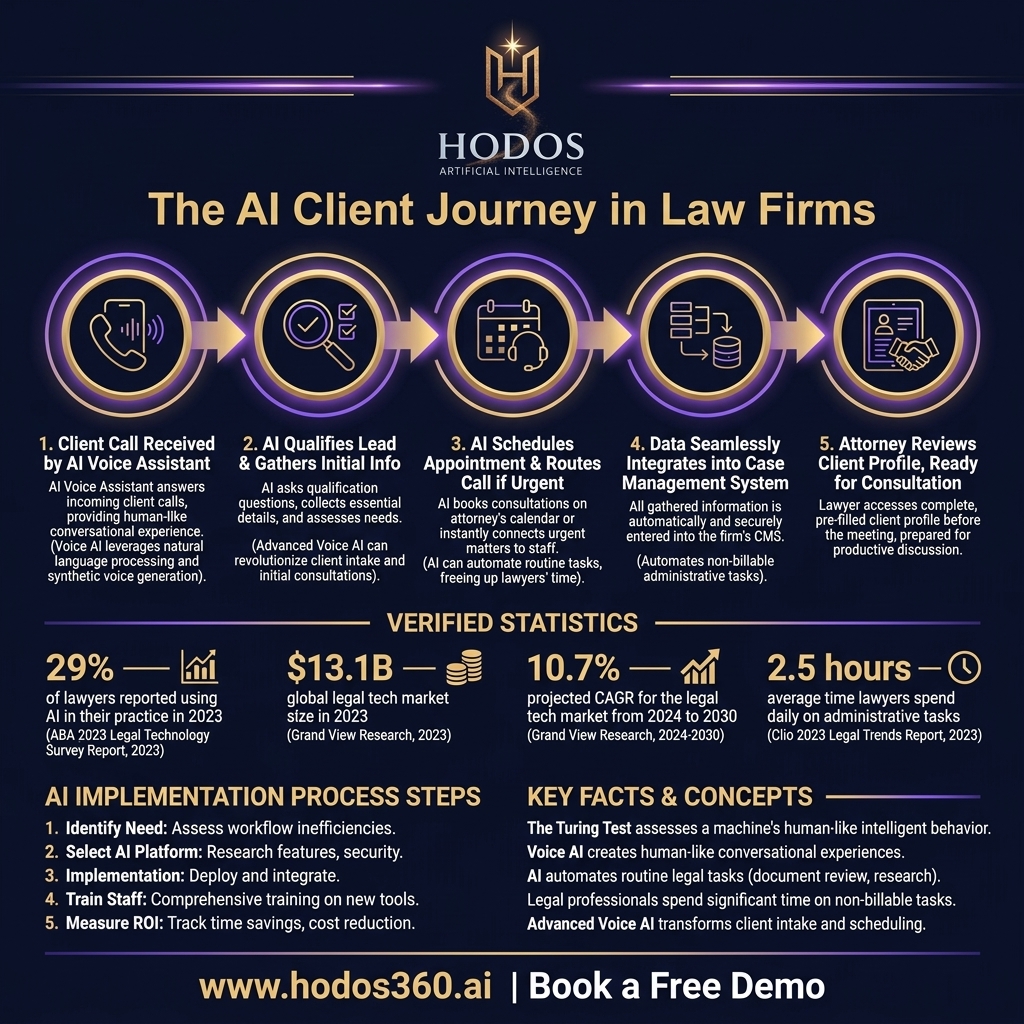
Client intake is often the bottleneck in many law firms, a process fraught with missed calls, delayed responses, and inconsistent information gathering. The advent of highly sophisticated Voice AI, exemplified by Smallest.ai's achievement, promises to dismantle these inefficiencies. Firms can now deploy AI voice assistants that are available 24/7, ensuring no potential client call goes unanswered. These intelligent systems can conduct initial lead qualification, gathering essential details like case type, urgency, and contact information, all through natural, human-like conversation. This not only improves the client experience but also provides attorneys with pre-qualified leads, ready for deeper engagement.
Consider the operational benefits outlined in the 2024 ABA Legal Technology Survey Report, which highlighted client communication as a perennial challenge for small to mid-sized firms. Learn more about Legal Tech Adoption: Mastering AI for Law Firms in 2026. An AI voice assistant can handle a high volume of phone calls, drastically reducing hold times and the burden on administrative staff. Furthermore, these systems can offer multilingual support, a crucial advantage in today's diverse legal landscape, breaking down communication barriers and expanding a firm's potential client base. This capability ensures that every call is routed efficiently, whether it's booking an appointment, answering FAQs, or escalating an urgent matter directly to an attorney, transforming the client's initial interaction from a potential frustration into a seamless, professional experience.
Beyond Answering Machines: The Nuance of AI-Powered Legal Conversations
The distinction between rudimentary chatbots and advanced Voice AI that passes the Turing Test is profound. Traditional automated systems often struggle with ambiguity, emotional cues, or complex legal jargon. Smallest.ai's technology, by contrast, is designed to navigate these intricacies, offering a level of interaction that is genuinely empathetic and context-aware. This means an AI can discern the urgency in a client's voice, understand implied questions, and respond with appropriate legal disclaimers or reassurances, much like a seasoned legal assistant.
For instance, managing partner Sarah Chen of LexCorp Legal recently shared her firm's early struggles with generic AI solutions, noting their inability to handle the subtle nuances of client distress or complex legal terminology. Learn more about GenAI Governance: Essential Frameworks for Law Firms. However, with the emergence of more advanced voice models, she sees a clear path to integrating AI that truly complements her team. This shift from mere automation to intelligent, human-like interaction is what differentiates a basic answering service from a sophisticated AI voice assistant, delivering not just efficiency but also an enhanced perception of client care and professionalism. Explore the future of client engagement with HODOS 360's AI Voice Assistants and see the difference firsthand.
Operational Efficiency and the AI-Driven Law Firm
The impact of advanced Voice AI extends far beyond the initial client interaction, deeply integrating with and enhancing a law firm's core operational workflows. By seamlessly connecting with AI Law Firm Management Systems, these intelligent assistants can automate numerous administrative tasks that consume valuable attorney and paralegal time. Imagine an AI voice assistant directly scheduling appointments in a firm's calendar, updating case management systems with new client details, or initiating document automation processes based on call summaries. This level of integration streamlines operations, reduces manual data entry errors, and frees up human capital to focus on high-value legal work, directly impacting a firm's bottom line.
According to a recent Thomson Reuters Legal Executive Institute report, law firms are increasingly seeking integrated technological solutions to combat rising operational costs and enhance productivity. Voice AI, particularly models designed to pass the Turing Test, represents a critical component of this evolution. Learn more about AI Virtual Assistant: Essential for Modern Law Firms. It can efficiently route calls to the correct department or attorney, manage follow-up reminders, and even assist with internal communications, ensuring that information flows smoothly across the firm. This proactive, intelligent automation transforms a firm's operational backbone, making it more agile and responsive to both internal demands and client needs. The competitive drama in the legal tech space is intense, with firms that adopted AI early, like Clifford Chance with its internal AI initiatives, showing significant gains over those clinging to traditional, labor-intensive methods.
- ✓24/7 Client Availability: Ensure no potential client is missed, regardless of time zone or operational hours, with AI handling initial queries.
- ✓Automated Lead Qualification: AI voice assistants can efficiently screen and qualify leads, presenting attorneys with pre-vetted, high-potential cases.
- ✓Seamless Appointment Scheduling: Integrate directly with firm calendars to book and manage client consultations without manual intervention.
- ✓Multilingual Support: Break down language barriers, making legal services accessible to a broader, more diverse client base.
- ✓Call Routing & Escalation: Intelligently direct calls to the most appropriate team member or escalate urgent matters in real-time.
- ✓Data Integration: Automatically update client information and call summaries into case management and CRM systems, reducing manual input.
- ✓Reduced Administrative Burden: Free up paralegals and support staff from routine phone tasks, allowing them to focus on substantive legal work.
Navigating Ethical Boundaries and Client Trust in AI Interactions
While the efficiency gains are undeniable, integrating sophisticated Voice AI into legal practice necessitates careful consideration of ethical implications and client trust. The ABA Model Rules of Professional Conduct, particularly Rule 1.6 on Confidentiality of Information and Rule 1.4 on Communication, provide a framework. Firms must be transparent with clients about AI involvement, ensuring informed consent, especially when sensitive information is being discussed. The recent EU AI Act, while primarily targeting high-risk AI, sets a global precedent for accountability and transparency, pushing legal tech providers and firms to implement robust safeguards.
Leading firms like Allen & Overy, through its partnership with Harvey AI, have begun to set industry standards for ethical AI deployment, emphasizing data security and attorney oversight. The challenge lies in balancing the benefits of AI-driven efficiency with the fundamental requirement of maintaining client confidentiality and the human element of legal counsel. Learn more about Legal AI Content: Essential for Modern Contract Workflows. A Voice AI that passes the Turing Test blurs the lines, making transparency even more critical. Firms must establish clear policies on when and how AI interacts with clients, ensuring that the technology enhances, rather than diminishes, the fiduciary relationship. This careful navigation of technological advancement and professional responsibility will define the future of AI in legal services.
The Future of Legal Marketing and Business Development with Voice AI
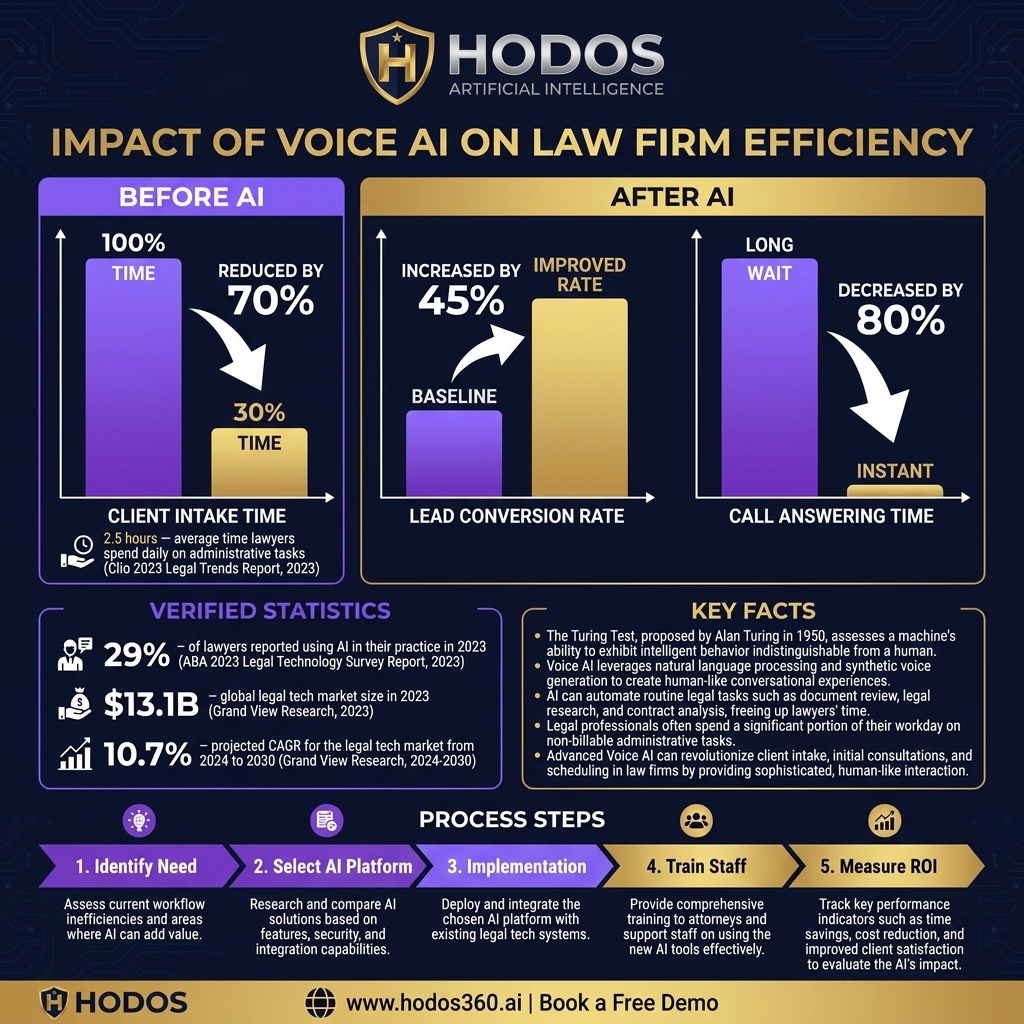
In an increasingly competitive legal market, effective marketing and business development are paramount. Voice AI, especially human-like models, offers a powerful new tool in a firm's marketing arsenal. A firm equipped with a 24/7 AI voice assistant that provides instant, intelligent, and empathetic responses effectively extends its marketing reach and enhances its brand reputation around the clock. This constant availability and high-quality interaction can significantly boost lead generation and conversion rates, as potential clients are more likely to engage with a firm that offers immediate, helpful assistance, even outside traditional business hours.
This technology integrates seamlessly with broader AI Marketing Platforms. Learn more about Essential Risk Management for Law Firms in the AI Era. The lead qualification data gathered by the voice AI can directly feed into targeted social media campaigns, content generation strategies, and AI video creation tools. For instance, if the AI identifies a surge in calls related to real estate law, the marketing platform can automatically generate blog posts, social media updates, or even short AI-generated explainer videos on recent property legislation, ensuring the firm remains top-of-mind for relevant prospects. The 2024 Gartner report on customer experience highlights that immediate, personalized responses are key drivers of client satisfaction and loyalty, a metric that advanced Voice AI is uniquely positioned to improve.
Strategic Integration: Weaving Voice AI into Your Firm's Digital Tapestry
Implementing Voice AI effectively requires a holistic approach, weaving it into the very fabric of a firm's digital presence. This includes integrating the AI with a firm's Web & Mobile Development strategy, ensuring that the responsive design of a website is complemented by equally responsive and intelligent voice interaction. AI-powered website building, coupled with a sophisticated voice assistant, creates a seamless, intuitive user experience across all digital touchpoints. This synergy not only optimizes SEO by enhancing user engagement and reducing bounce rates but also positions the firm as a technologically advanced and client-centric entity.
Consider how a high-converting website template, designed for optimal user experience, can be further enhanced by a voice AI that can guide visitors, answer questions, and even initiate client intake directly from a mobile device. This level of strategic integration ensures that every aspect of a firm's digital footprint works in concert to attract, engage, and convert clients. The goal is to create a unified, intelligent ecosystem where AI tools, including voice, web, and marketing platforms, work together to drive growth and operational excellence, offering a truly 360-degree approach to legal practice management.

Key Takeaways and Next Steps for Law Firms
Smallest.ai's success in having its Voice AI pass the Turing Test is not just a technological marvel; it's a clarion call for the legal industry to embrace the next generation of AI. The implications for client intake, operational efficiency, and business development are profound and immediate. Firms that strategically integrate advanced Voice AI into their operations will unlock unprecedented levels of productivity, client satisfaction, and competitive advantage, moving beyond outdated manual processes.
The journey to an AI-powered future begins with understanding the capabilities of these tools and identifying areas within your firm where they can deliver the most impact. Start by exploring solutions like HODOS 360's AI Voice Assistants, which offer 24/7 phone answering, lead qualification, and appointment booking, all designed to integrate seamlessly with your existing workflows. The time to act is now; waiting risks falling behind in a rapidly evolving legal landscape. Embrace these innovations to redefine your firm's future. Book a free demo today to see how HODOS 360 can transform your legal practice.
Frequently Asked Questions
What does a Voice AI passing the Turing Test mean for my law firm?+
It means AI can now engage in phone conversations indistinguishable from human interactions, offering highly natural and empathetic communication. For law firms, this translates to superior client intake, 24/7 availability, advanced lead qualification, and the ability to handle complex queries with human-like nuance, significantly enhancing client experience and operational efficiency.
How can Voice AI improve my firm's client intake process?+
Voice AI can provide instant, round-the-clock responses to prospective clients, ensuring no call is missed. It can perform initial lead qualification, gather essential information, book appointments directly into your calendar, and even offer multilingual support, streamlining the intake funnel and freeing up your staff for more substantive tasks.
Are there ethical concerns with using human-like Voice AI in legal practice?+
Yes, ethical considerations are crucial. Law firms must ensure transparency with clients about AI involvement and obtain informed consent, especially regarding data privacy and confidentiality (referencing ABA Model Rule 1.6). Implementing robust safeguards and maintaining attorney oversight is paramount to building and preserving client trust while leveraging AI's benefits.
How does Voice AI integrate with existing law firm management systems?+
Advanced Voice AI can seamlessly integrate with AI Law Firm Management Systems. It can automatically update client information, schedule appointments, and log call summaries directly into case management software. This integration reduces manual data entry, enhances data accuracy, and creates a more efficient, interconnected operational workflow across your firm.
Can Voice AI help with my law firm's marketing and business development efforts?+
Absolutely. A 24/7, human-like Voice AI enhances your firm's responsiveness and professionalism, directly contributing to a stronger brand image. It can qualify leads for targeted marketing campaigns, provide valuable data for content generation, and ensure every client touchpoint is positive, ultimately improving lead conversion and client retention rates.