
AI in Law Firms: Essential Daily Tools for Modern Practice
The headline from *Il Sole 24 ORE* — "In the law firm, Ai is a daily tool" — isn't merely a statement; it's a testament to a profound transformation sweeping across the global legal landscape. This shift, once viewed with skepticism by many traditional practitioners, has now firmly established artificial intelligence as an indispensable component of modern legal practice.
Consider Avvocato Marco Rossi, Managing Partner at Studio Legale Innova in Milan. Just five years ago, his firm’s foray into AI was limited to experimental e-discovery platforms. Today, as Rossi observes, "AI isn't just for complex litigation anymore; it's woven into the fabric of our daily operations, from client intake to document review, allowing our lawyers to focus on high-value strategic counsel."
This evolution underscores a critical reality: the question is no longer *if* law firms will adopt AI, but *how comprehensively* they will integrate these essential daily tools to maintain competitive advantage and deliver superior client outcomes. The narrative arc of AI in legal practice has moved from speculative innovation to practical necessity, driven by advancements from companies like OpenAI, Anthropic, and specialized legal tech providers.
This widespread adoption isn't accidental; it's a direct response to the escalating demands for efficiency, accuracy, and cost-effectiveness in a rapidly evolving legal market. Firms that once hesitated, fearing the unknown or the perceived cost, are now actively seeking robust AI solutions, spurred by the success stories of early adopters.
For instance, the collaboration between Harvey AI and global firm Allen & Overy, announced at LegalTech NYC 2023, demonstrated how generative AI could significantly accelerate legal research and drafting, providing a powerful proof point for the industry. Brad Blickstein, Principal at the Blickstein Group, frequently highlights in his industry reports that firms leveraging AI are not just saving time but are fundamentally reshaping their service delivery models, offering clients faster, more precise, and often more affordable legal services.
The competitive pressure to innovate is palpable, creating a dynamic where AI is no longer a luxury but a strategic imperative for any law firm aiming for sustained growth and leadership in the 21st century. The legal business landscape has become irrevocably intertwined with the capabilities of artificial intelligence, making AI in law firms a critical area of focus for every forward-thinking lawyer and legal professional.
The Paradigm Shift: AI's Ascent as a Daily Legal Tool
The journey of artificial intelligence from a niche academic concept to a core operational component in law firms illustrates a profound paradigm shift. Historically, the legal profession, often lauded for its adherence to tradition and precedent, approached technological innovation with a cautious, even skeptical, stance.
Early legal tech tools were often clunky, expensive, and failed to deliver on their promises, reinforcing this apprehension. However, the last five years have witnessed an acceleration in AI capabilities, particularly with the advent of large language models (LLMs) and advanced machine learning, which have proven their practical utility across various sectors.
This technological leap, spearheaded by visionaries like Sam Altman at OpenAI and Dario Amodei at Anthropic, has democratized access to powerful AI, making sophisticated tools available even to mid-sized legal firms, not just the global giants. The competitive landscape has also played a significant role; firms that initially resisted are now observing their more agile counterparts gain substantial efficiencies and market share by embracing AI as a daily tool.
This shift is not merely about adopting new software; it's about fundamentally rethinking legal processes and service delivery. The *Il Sole 24 ORE* article highlights Italy's leadership in recognizing AI as a daily tool, reflecting a broader European trend toward integrating advanced tech. According to the 2023 ABA Tech Report, over 30% of law firms reported using AI for legal research, contract analysis, or document automation, a significant jump from previous years.
This data underscores that AI is no longer an experimental fringe technology but a mainstream operational asset. Learn more about Ultimate Inbound Marketing AI Guide for Law Firms. Firms are leveraging AI not just for automating mundane tasks like data entry or scheduling but for more complex cognitive work, such as predictive analytics for litigation outcomes, identifying relevant precedents from vast legal databases, and even drafting initial legal documents.
The perception of AI has transformed from a potential job threat to an invaluable assistant that augments human capabilities, allowing lawyers to become more strategic, creative, and client-focused, thereby enhancing the overall value proposition of legal services.
One compelling example of this integration is the rapid adoption of AI-powered legal research platforms.
Services like Thomson Reuters' CoCounsel and LexisNexis' Lexis+ AI are fundamentally changing how lawyers conduct research. Instead of sifting through thousands of documents, lawyers can pose complex questions in natural language, receiving synthesized answers and relevant citations in minutes. This dramatically reduces the time spent on foundational research, a task that traditionally consumed a significant portion of a lawyer's day.
Furthermore, AI tools are becoming instrumental in due diligence processes, capable of reviewing millions of documents for anomalies or specific clauses with unprecedented speed and accuracy. This not only mitigates risk but also significantly lowers the cost of large-scale transactions, making legal services more accessible and efficient.
The daily use of these artificial intelligence tools is reshaping the economic model of legal firms, allowing them to take on more cases, serve a broader client base, and ultimately grow their legal business in ways previously unimaginable, firmly cementing AI in law firms as an essential element of modern legal strategy.
Streamlining Operations: AI Law Firm Management Systems
The core of modern legal practice demands efficiency and precision, and AI Law Firm Management Systems are at the forefront of delivering both. These integrated platforms leverage artificial intelligence to automate and optimize virtually every administrative and operational aspect of a law firm, transforming the back office into a high-performance engine.
Consider the laborious process of client intake; traditionally, it involved extensive form filling, manual data entry, and multiple follow-ups. With AI, this process can be streamlined through intelligent chatbots that qualify leads, gather initial information, and even schedule appointments, drastically reducing the time from initial contact to engagement.
This not only enhances the client experience but also frees up paralegals and administrative staff for more critical tasks, optimizing resource allocation within the firm. The data collected during intake can then seamlessly flow into case management systems, eliminating redundant data entry and ensuring data accuracy from the outset.
Beyond intake, AI-powered case management systems provide lawyers with unparalleled oversight and control over their caseloads. These systems can predict case durations, identify potential bottlenecks, and suggest optimal resource allocation based on historical data and real-time inputs. For instance, an AI workflow might automatically flag upcoming deadlines, generate reminders for specific tasks, and even suggest relevant legal research based on the case's parameters.
Billing, often a contentious and time-consuming process, also benefits immensely from AI. Automated time tracking, smart expense categorization, and predictive billing analytics ensure greater accuracy, transparency, and faster payment cycles. This level of operational intelligence allows firms to not only manage their current workload more effectively but also to forecast future needs and plan for growth with greater confidence.
Learn more about AI Voice Assistants: Essential for Modern Law Firms. The integration of such robust artificial intelligence tools is becoming a cornerstone for legal firms looking to scale their operations efficiently and sustainably.
Document automation, a critical component of any modern legal practice, has been revolutionized by AI.
Instead of manually drafting standard agreements, pleadings, or letters, lawyers can leverage AI to generate high-quality documents from templates, populated with client-specific data. This significantly reduces drafting time, minimizes human error, and ensures consistency across all firm communications. For example, a contract automation tool can generate a complex commercial agreement in minutes, allowing the lawyer to focus on strategic negotiation points rather than boilerplate language.
Furthermore, AI-powered legal workflows can guide attorneys through multi-step processes, ensuring compliance with internal protocols and external regulations, such as those governing client confidentiality under ABA Model Rule 1.6 (Confidentiality of Information). This systematic approach reduces the risk of oversight and malpractice, safeguarding both the firm and its clients.
Ultimately, AI-driven law firm management systems are not just about automation; they are about creating a more intelligent, agile, and resilient legal business model, allowing lawyers to focus on the core legal work that truly matters.
HODOS 360’s AI Law Firm Management System exemplifies this comprehensive approach, offering an integrated suite of tools for case management, billing, client intake, document automation, and AI-powered legal workflows.
It empowers firms to move beyond traditional, siloed software solutions, providing a unified platform that drives efficiency and strategic growth. By centralizing these critical functions, HODOS 360 enables law firms to harness the full power of artificial intelligence, transforming complex administrative burdens into streamlined, intelligent processes.
Automated Workflows: Boosting Productivity for Lawyers
Automated legal workflows powered by AI represent a fundamental shift in how legal professionals approach their daily tasks, moving from manual, repetitive processes to intelligent, streamlined operations. This isn't about replacing lawyers but about amplifying their productivity and enabling them to dedicate more time to complex problem-solving, strategic thinking, and client interaction—the very aspects that define high-value legal work.
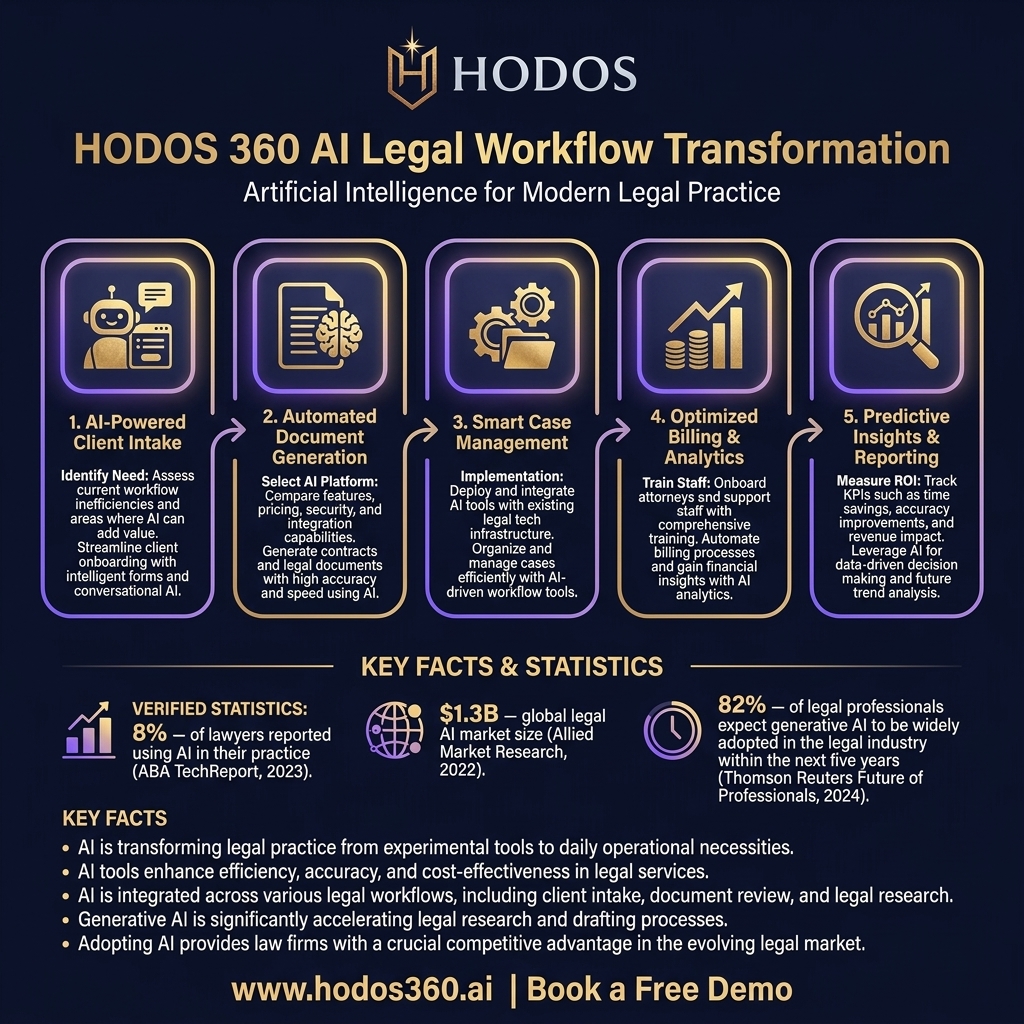
For instance, in real estate transactions, an AI workflow can automatically pull property records, cross-reference zoning laws, and generate initial closing documents, all while flagging any discrepancies for human review. This drastically cuts down on the time spent on administrative minutiae, allowing attorneys to focus on negotiation and client advising.
Learn more about Legal AI Content: Essential for Modern Contract Workflows. Similarly, in intellectual property, AI can monitor patent filings globally, identify potential infringements, and even assist in drafting initial cease and desist letters, ensuring proactive protection for clients. The efficiency gains are not marginal; according to a 2024 report by Thomson Reuters Legal Executive Institute, firms leveraging AI for workflow automation reported an average of 25-30% reduction in time spent on routine tasks, directly translating into higher partner utilization and profitability.
These advancements empower lawyers to handle more cases, provide more thorough analysis, and ultimately deliver superior legal outcomes, making these AI tools indispensable for competitive legal firms.
Beyond the Back Office: AI's Role in Client Engagement and Growth
While AI's impact on internal operations is transformative, its capabilities extend far beyond the back office, profoundly reshaping how law firms engage with clients and drive business growth. In today's competitive legal market, client experience is paramount, and AI is proving to be a game-changer in delivering personalized, responsive, and efficient interactions.
Consider the role of AI Voice Assistants, which offer 24/7 phone answering, ensuring that potential clients never encounter a busy signal or unanswered call. These intelligent assistants can qualify leads by asking targeted questions, book appointments directly into attorney calendars, and even provide multilingual support, catering to a diverse client base.
This always-on availability not only enhances client satisfaction but also significantly increases lead capture and conversion rates, giving firms a distinct edge in a crowded market. The ability to route calls intelligently ensures that clients are connected with the most appropriate legal professional quickly, reflecting a highly organized and client-centric approach that traditional answering services simply cannot match.
Furthermore, AI is revolutionizing how law firms market themselves and attract new business through sophisticated AI Marketing Platforms. Gone are the days of generic advertising; AI enables hyper-targeted campaigns based on demographic data, legal needs, and online behavior. AI-powered content generation tools can craft compelling blog posts, social media updates, and website copy, ensuring a consistent and authoritative online presence without significant manual effort.
For example, an AI could analyze trending legal topics in a specific jurisdiction and generate relevant articles that position the firm as a thought leader. Learn more about Legal AI Deployment: The Ultimate Firmwide Strategy for Torys. Social media automation ensures that this content reaches the right audience at optimal times, while advanced analytics and ROI tracking provide real-time insights into campaign performance.
This allows firms to refine their marketing strategies, allocate budgets more effectively, and demonstrably prove the return on investment for their marketing efforts. The precision and reach offered by these artificial intelligence tools are unparalleled, allowing legal firms to cultivate a stronger brand presence and attract a steady stream of qualified leads.
HODOS 360's AI Marketing Platform integrates AI video creation, social media automation, content generation, analytics, and ROI tracking, providing a holistic solution for firms to enhance their digital footprint and attract new clients. Simultaneously, our AI Voice Assistants offer 24/7 phone answering, lead qualification, appointment booking, and multilingual support, ensuring no client inquiry goes unaddressed.
These services collectively empower law firms to not only optimize their internal processes but also to significantly elevate their external presence and client engagement strategies. The adoption of these client-facing AI solutions is not just about convenience; it's about building a reputation for innovation, responsiveness, and forward-thinking legal service, qualities that are increasingly valued by modern clients.
By leveraging these powerful tools, law firms can solidify their position as leaders in the legal business, setting new standards for client care and strategic growth. The competitive advantage derived from these advanced AI capabilities ensures that firms remain at the forefront of legal innovation, securing their future in an increasingly digital world.
AI-Powered Marketing: Driving Firm Visibility and ROI
In a crowded legal market, visibility is paramount, and AI-powered marketing platforms are becoming the most effective tools for law firms to stand out and attract their ideal clientele. The days of simply having a website are long gone; today, firms need a dynamic, data-driven approach to digital outreach.
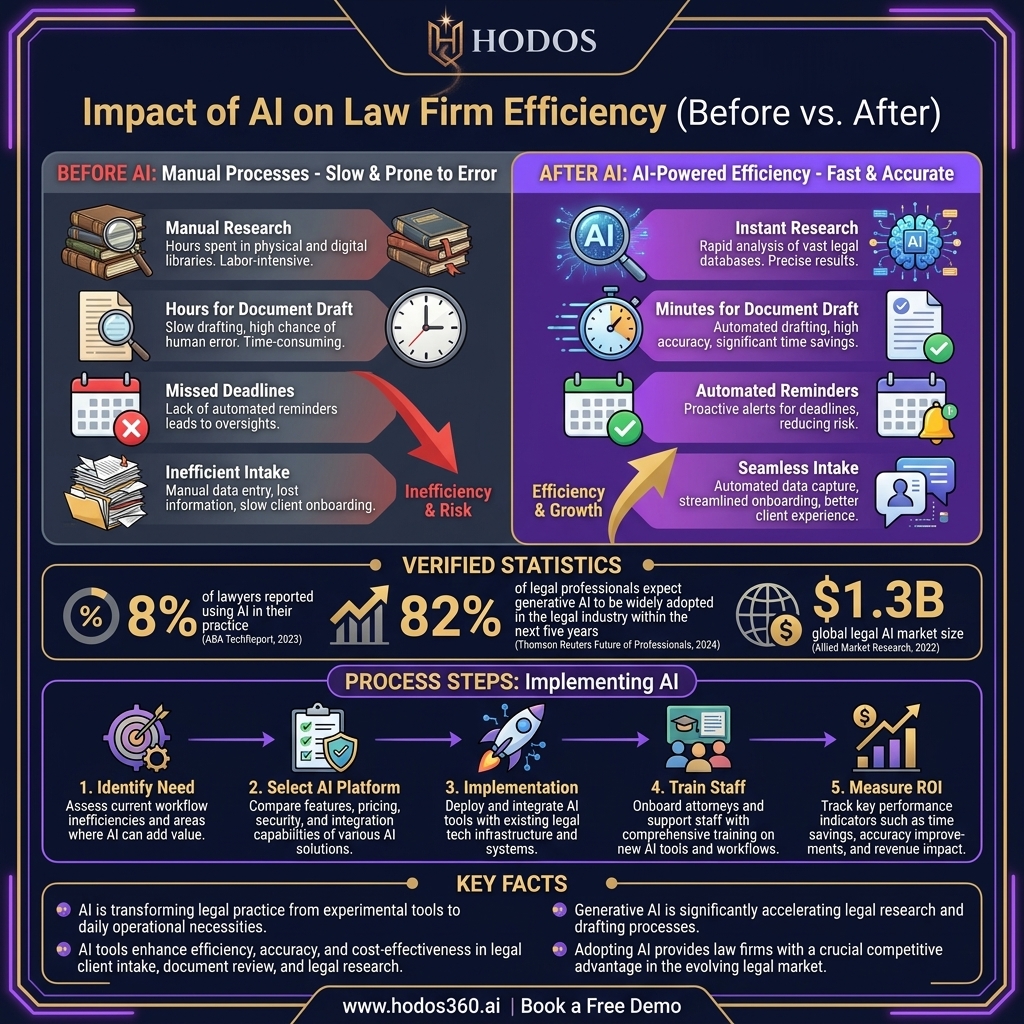
AI marketing platforms excel at creating personalized content that resonates with specific client segments. Imagine an AI analyzing search trends for "startup legal advice" in a particular city and then generating a series of blog posts and social media snippets tailored to the challenges faced by new entrepreneurs, complete with relevant case studies from the firm.
This level of targeted content generation ensures that the firm's expertise is showcased precisely where and when it's most needed. Furthermore, social media automation tools ensure consistent brand messaging across all platforms, optimizing post timing for maximum engagement and reach. This strategic deployment of content elevates the firm's authority and thought leadership, driving organic traffic and attracting high-quality leads.
According to a 2023 McKinsey report, businesses leveraging AI for marketing saw an average increase of 15-20% in conversion rates due to enhanced personalization and efficiency.
Crucially, AI marketing platforms provide robust analytics and ROI tracking capabilities that were previously unattainable for many firms. Learn more about AI Document Workflows: Unleash Firm Efficiency in 2026.
Instead of guessing which marketing efforts are effective, firms can now see precise data on lead sources, client acquisition costs, and the overall return on investment for each campaign. This data-driven approach allows for continuous optimization, ensuring that marketing budgets are allocated to the most impactful channels and strategies.
For example, if an AI analysis reveals that LinkedIn campaigns are generating significantly higher-value leads than Google Ads for a specific practice area, the firm can adjust its spending accordingly. This level of insight transforms marketing from a speculative expense into a strategic investment with measurable outcomes.
By integrating AI-powered website building, responsive design, and SEO optimization, firms can create high-converting digital presences that serve as powerful client acquisition engines. These web and mobile development capabilities, often enhanced by AI, ensure that the firm's online storefront is not just aesthetically pleasing but also functionally optimized to convert visitors into clients, cementing AI as an indispensable daily tool for modern legal marketing and firm growth.
Navigating the Future: Ethical Considerations and Regulatory Landscape
As AI becomes an increasingly ubiquitous daily tool in law firms, it brings with it a complex web of ethical considerations and a rapidly evolving regulatory landscape that legal professionals must navigate with diligence. The promise of AI's efficiency must be balanced against the imperative to uphold core legal principles such as confidentiality, competence, and avoiding bias.
One significant concern revolves around data privacy and security, especially when sensitive client information is processed by AI systems. Firms must ensure that their AI tools comply with stringent data protection regulations, such as the GDPR in Europe or state-specific privacy laws in the U.S., and that client data is adequately anonymized or protected.
The ABA Model Rules of Professional Conduct, specifically Rule 1.1 (Competence), mandates that lawyers must stay abreast of changes in technology. This includes understanding the capabilities and limitations of AI tools, ensuring that their use does not lead to errors or breaches of ethical duties.
Firms like Freshfields Bruckhaus Deringer are actively advising clients on the implications of the EU AI Act, which, once fully enforced, will set a global benchmark for AI regulation, requiring rigorous risk assessments and transparency measures for AI systems deemed high-risk.
Another critical ethical challenge is the potential for algorithmic bias.
AI systems are trained on vast datasets, and if these datasets contain historical biases—whether societal, racial, or gender-based—the AI can perpetuate or even amplify these biases in its outputs. For example, an AI tool used for predictive analytics in criminal justice could inadvertently discriminate against certain demographic groups if its training data was skewed.
Lawyers have a professional obligation to ensure justice and fairness, and the use of biased AI tools could undermine this duty. Firms must implement robust oversight mechanisms, regularly audit their AI systems for fairness and accuracy, and ensure human review remains a critical safeguard. This is not a trivial task; it requires ongoing vigilance and a commitment to ethical AI development and deployment.
Learn more about Voice AI Assistant: The Ultimate Guide for Law Firms. The legal profession, perhaps more than any other, has a responsibility to champion the ethical deployment of artificial intelligence, setting a precedent for responsible innovation.
Furthermore, the question of attorney-client privilege and work product protection in the context of AI use is paramount.
When an AI system processes confidential client communications or assists in legal strategy development, firms must ensure that these privileges are not inadvertently waived or compromised. This necessitates clear policies on how AI tools interact with privileged information and secure, encrypted environments for AI processing.
The legal community is actively grappling with these issues, with various bar associations issuing guidance on the ethical use of AI. For instance, the State Bar of California has released opinions on the ethical implications of generative AI, emphasizing the lawyer's duty of confidentiality and supervision.
The rapid evolution of AI technology means that these ethical considerations are not static; they require continuous assessment and adaptation by law firms and regulatory bodies alike, ensuring that AI remains a beneficial and responsible daily tool.
Finally, the development of robust digital infrastructure through Web & Mobile Development is integral to navigating this future responsibly.
AI-powered website building, responsive design, and SEO optimization are not just about marketing; they are about creating secure, compliant, and user-friendly portals for client interaction and data exchange. High-converting templates must also incorporate best practices for data privacy and security. Firms must invest in building platforms that are not only aesthetically appealing but also technically sound, ensuring that client information is protected and that the firm's digital presence reflects its commitment to ethical practice.
This foundational digital hygiene is critical because, as AI becomes more deeply embedded, the integrity and security of the underlying digital infrastructure become even more vital. The global legal business will increasingly rely on these secure, AI-powered digital environments.
Building Resilient Digital Infrastructure: Web & Mobile Development
In an era where AI is a daily tool, a law firm's digital infrastructure is its bedrock. Web & Mobile Development is no longer a peripheral IT function but a strategic imperative, especially when integrating sophisticated AI solutions. An AI-powered website building platform, for example, allows firms to create dynamic, high-converting websites that are not only visually appealing but also optimized for performance and client engagement.
Responsive design ensures a seamless user experience across all devices, from desktops to smartphones, which is crucial for client accessibility and satisfaction in a mobile-first world. More importantly, robust SEO optimization, often enhanced by AI algorithms, ensures that the firm's online presence is discoverable by potential clients searching for legal services.
This means integrating AI not just into the backend operations but also into the very public face of the firm. High-converting templates, designed with user psychology and legal service conversion funnels in mind, play a pivotal role in transforming visitors into leads. However, the resilience of this digital infrastructure also hinges on security.
With the increased use of AI, the attack surface for cyber threats expands. Therefore, robust security protocols, regular audits, and compliance with data protection standards are non-negotiable. Firms must ensure their web and mobile platforms are fortified against breaches, protecting sensitive client data and maintaining professional integrity, which is a core tenet for any lawyer.
This holistic approach to digital presence, fortified by AI and strong development practices, ensures that law firms can confidently leverage technology while mitigating risks, making their digital platforms an indispensable part of their daily operational success.

Key Takeaways and Next Steps
The journey of artificial intelligence from a nascent technology to an essential daily tool in law firms marks a pivotal moment in the legal profession's history. As demonstrated by the Italian legal sector's proactive adoption, and validated by global trends and reports from institutions like the ABA and Thomson Reuters, AI is no longer an optional enhancement but a strategic imperative for competitive legal firms.
The firms that embrace these artificial intelligence tools are not just gaining efficiencies; they are fundamentally redefining their capabilities, client relationships, and market position. From streamlining complex legal workflows and automating administrative burdens to enhancing client engagement through intelligent assistants and driving growth with sophisticated marketing platforms, AI empowers lawyers to reclaim time for high-value work, deliver superior outcomes, and innovate their service offerings.
The dramatic advancements in AI, driven by companies like OpenAI and the continuous innovation in legal tech, mean that law firms now have access to powerful, accessible solutions that can transform every facet of their legal business.
For law firm owners and legal professionals looking to thrive in this new era, the next steps are clear: strategic integration and continuous learning.
It’s crucial to assess current operational bottlenecks, identify areas where AI can deliver the most significant impact, and invest in comprehensive, integrated solutions. This isn't just about adopting isolated tools but about building an intelligent, interconnected ecosystem that supports every aspect of the firm. Embrace the opportunities presented by AI to enhance competence, improve client service, and secure a sustainable future for your practice.
HODOS 360 offers a holistic suite of AI-powered services—from Law Firm Management and Marketing Platforms to AI Voice Assistants and Web & Mobile Development—designed to help firms navigate this transformation seamlessly. By choosing integrated and forward-thinking AI solutions, law firms can ensure they remain at the forefront of legal innovation, turning the promise of AI into tangible, daily success.
The future of the legal profession is intrinsically linked to the intelligent adoption of these powerful AI tools, transforming how lawyers work and how clients experience legal services globally.
- ✓Embrace Integrated AI Solutions: Move beyond siloed tools to comprehensive platforms that connect case management, billing, client intake, and document automation for maximum efficiency.
- ✓Prioritize Client-Facing AI: Leverage AI Voice Assistants and Marketing Platforms to enhance lead qualification, improve client communication, and drive measurable business growth.
- ✓Invest in Secure Digital Infrastructure: Ensure your firm's web and mobile presence is not only aesthetically pleasing and SEO-optimized but also robustly secure to protect sensitive client data.
- ✓Develop AI Literacy: Lawyers and staff must continuously learn about AI's capabilities, limitations, and ethical implications to ensure responsible and effective deployment.
- ✓Focus on High-Value Work: Utilize AI to automate routine tasks, freeing up legal professionals to concentrate on strategic legal counsel, complex problem-solving, and client relationship building.
- ✓Stay Ahead of Regulatory Changes: Monitor evolving AI regulations, like the EU AI Act and state bar guidelines, to ensure continuous compliance and ethical practice.
Frequently Asked Questions
Is AI replacing lawyers?+
No, AI is not replacing lawyers; it's augmenting their capabilities. AI automates routine tasks like document review and legal research, freeing up lawyers to focus on higher-value work such as strategic advice, negotiation, and complex problem-solving. It's a tool that enhances efficiency and accuracy, allowing legal professionals to deliver better outcomes and manage larger caseloads, thereby elevating the role of the human lawyer.
How can small law firms afford AI tools?+
Many AI legal tech solutions are now offered on subscription-based models, making them accessible and affordable for small law firms. Cloud-based platforms eliminate the need for significant upfront infrastructure investments. Furthermore, the efficiency gains from AI can quickly offset costs by reducing manual labor, improving client intake, and increasing billable hours, leading to a strong return on investment even for smaller practices.
What are the biggest risks of using AI in law?+
The primary risks include data privacy breaches, algorithmic bias leading to unfair outcomes, and potential breaches of attorney-client privilege if not properly managed. Firms must ensure robust cybersecurity, regularly audit AI systems for bias, and establish clear guidelines for AI use to maintain confidentiality and ethical standards. Human oversight and critical review remain essential to mitigate these risks effectively.
How do law firms choose the right AI tools?+
Choosing the right AI tools involves assessing a firm's specific needs, budget, and integration capabilities. Firms should look for solutions that offer demonstrable ROI, are user-friendly, and integrate seamlessly with existing systems. Prioritize comprehensive platforms that cover multiple operational areas, from case management to marketing. Pilot programs and vendor demos can help evaluate effectiveness before full-scale adoption, ensuring the chosen AI tools align with strategic goals.
What's the future of AI in legal practice?+
The future of AI in legal practice points towards even deeper integration and sophistication. We can expect more predictive analytics for litigation outcomes, highly personalized client experiences, and advanced automation across all legal workflows. AI will continue to evolve as an indispensable co-pilot for lawyers, driving greater efficiency, accessibility, and innovation in legal service delivery, ultimately reshaping the entire legal ecosystem to be more responsive and client-centric.